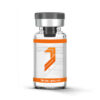
TB-500 & BPC-157 10 mg Mix – Pre-mixed Stack for Regeneration Research
⚠️ Warning: This product is intended solely for scientific research purposes (research use only). It is not intended for use as a medicine, drug, dietary supplement, or for human use. Sale restricted to individuals over the age of 18.
The TB-500 & BPC-157 Mix is a premixed research compound containing 5 mg of BPC-157 and 5 mg of TB-500 in a single lyophilized vial (total weight 10 mg). This stack was designed for researchers investigating the synergistic effects of both peptides and seeking simpler sample preparation for laboratory work. Both peptides are individually the subject of extensive preclinical research; the combination is the subject of studies on complementary regenerative mechanisms. On jacked.sk, the TB-500 & BPC-157 Mix is available exclusively for scientific research purposes.
What is the TB-500 & BPC-157 Mix?
Ingredients: 5 mg BPC-157 + 5 mg TB-500 in one vial
The mix contains precisely measured amounts of two different research peptides:
- BPC-157 (Body Protection Compound 157) – a synthetic pentadecapeptide (15 amino acids) isolated from human gastric juice; purity of each component ≥98%
- TB-500 (Thymosin Beta-4) – a synthetic version of a 43-amino acid endogenous peptide; purity of each component ≥98%
Each ingredient is individually tested using HPLC before premixing, which ensures the accuracy of the declared composition.
Why a premixed stack? Benefits for research
For researchers who routinely work with both peptides, the premixed stack offers several practical advantages: a reduction in the number of reconstitutions, precise 1:1 ratio dosing, fewer vials, and logistical simplicity in preparing laboratory protocols. Researchers who need variable component ratios may prefer to purchase individual peptides separately.
The Scientific Basis of the Combination: Complementary Mechanisms
Scientific interest in the combination of BPC-157 and TB-500 is based on the assumption that both peptides act through distinct but potentially synergistic mechanisms at different levels of the biological response to injury.
BPC-157 – Local Regeneration Axis (FAK-paxillin / NO Synthase)
BPC-157 acts primarily through the FAK-paxillin (focal adhesion kinase) and NO synthase (nitric oxide synthase) signaling pathway. Research in animal models has observed its effect on wound and tissue healing in the immediate vicinity of the lesion—therefore, the effects of BPC-157 are described in the literature as local and targeted. BPC-157 is a fragment of the BPC protein isolated from human gastric juice and has demonstrated stability in the acidic environment of the stomach in preclinical models.
TB-500 – Systemic Regeneration Axis (Actin Mechanism)
TB-500 acts by binding to G-actin via the LKKTETQ sequence, thereby regulating the polymerization of actin filaments. This mechanism has a much broader, systemic nature —it influences cell migration, angiogenesis, and the tissue response to injury throughout the body. Thymosin Beta-4 is naturally present in platelets, suggesting a role in the systemic coordination of repair processes.
Preclinical Research on Combined Administration
In studies using rat models, the combined administration of BPC-157 and TB-500 was investigated in various types of tissue injuries. Preclinical data suggest that the local effect of BPC-157 and the systemic effect of TB-500 are complementary—a hypothesis that underpins the research interest in this combination. These results are preclinical and do not indicate effects in humans.
Overview of Research Areas for the Combination of BPC-157 and TB-500
Tendons and Ligaments
Preclinical research using animal models examined the effect of a combination of BPC-157 and TB-500 on tendon (Achilles tendon) and ligament (anterior cruciate ligaments) injuries. The research observed accelerated histological healing and improved mechanical properties of the regenerated tissues compared to the control groups. (Hsieh MJ et al., studies in rat models)
Gastrointestinal tract
BPC-157 has been particularly well studied in preclinical models in the context of the GI tract—its gastroprotective and ulcer-protective properties are among the most extensively documented areas of research on this peptide. TB-500 complements this mechanism by influencing angiogenesis in the GI tract mucosa. Combined research using models of inflammatory bowel disease (IBD) is an active area of study.
The Heart Muscle and the Circulatory System
Both peptides have a documented effect on the cardiovascular system in preclinical models: TB-500 through the migration of cardiomyocyte progenitors and the reduction of apoptosis following ischemic injury, and BPC-157 through NO-dependent angiogenesis and vascular protection. The combined study is investigating whether these effects are additive or synergistic.
Mixtures vs. Individual Compounds – When to Use Which in Research
| Situation | Recommendations for Research |
| Research on the synergistic effect of both peptides in a 1:1 ratio | TB-500 & BPC-157 Mix 10 mg |
| Research requiring a variable ratio of BPC-157 to TB-500 | Individual products (BPC-157 5 mg + TB-500 5 mg) |
| Research on the Mechanism of Action of BPC-157 Alone | BPC-157 5 mg alone |
| Research on the Mechanism of Action of TB-500 Alone | TB-500 5 mg alone |
| Pilot study using a standard 1:1 protocol | Mix – Simpler Logistics |
Product Technical Specifications
| Parameter | Value |
| Ingredients | 5 mg BPC-157 + 5 mg TB-500 |
| Total weight | 10 mg |
| Form | Freeze-dried powder (lyophilisate) |
| Purity of each component | ≥98% (HPLC-verified) |
| Storage | −20 °C (long-term); 2–8 °C (after reconstitution, up to 30 days) |
| Intended Use | For scientific research purposes only |
Storage and Reconstitution for Research Use
The lyophilized mixture is stable at −20 °C in its original, sealed packaging. For reconstitution in laboratory research, bacteriostatic water for injection or sterile water is used—the same principles apply to the premixed product as to the individual peptides. After reconstitution, the product is stable at 2–8 °C for 30 days. Repeated freezing reduces the integrity of both peptide components—therefore, aliquoting is recommended before the first freezing.
Frequently Asked Questions About the TB-500 & BPC-157 Mix (FAQ)
⚠️ Warning – Intended exclusively for research purposes
All products sold on jacked.sk are intended EXCLUSIVELY for scientific research purposes. They are not intended for use as a medicine, drug, dietary supplement, or cosmetic product, nor for human or veterinary use. The results cited in the descriptions are based on preclinical studies (in vitro, animal models) and cannot be automatically extrapolated to human use. Sale restricted to individuals over the age of 18. By purchasing this product, the customer confirms that they are a professional researcher and will use the product solely in accordance with applicable laws.