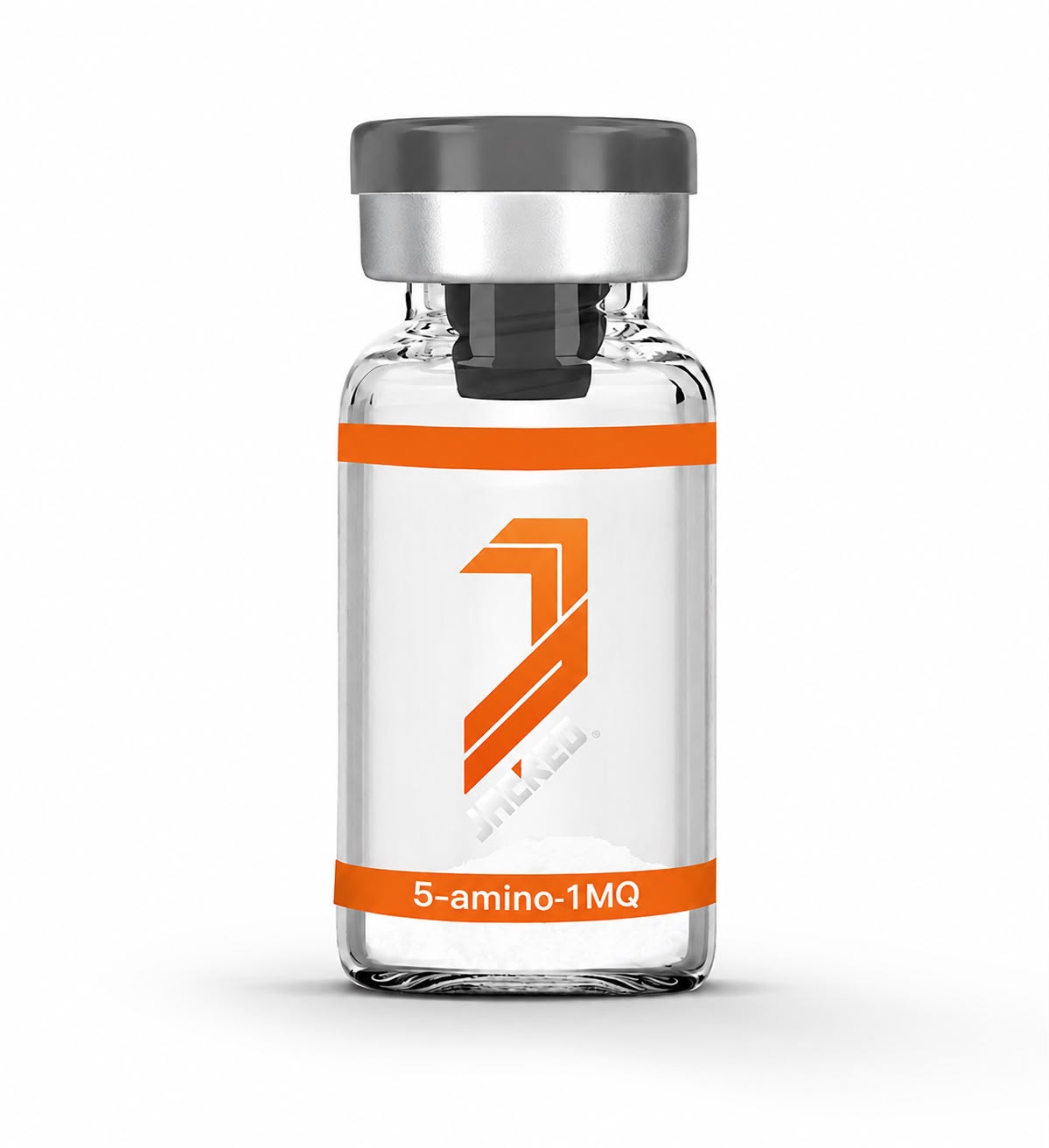
5-Amino-1MQ 50 mg — Selective NNMT Inhibitor for Research in Metabolism and Adipocyte Biology
⚠️ Warning: This product is intended exclusively for scientific research and laboratory use. It is not intended for human or veterinary use, nor for the diagnosis, treatment, or prevention of any disease. Sale restricted to individuals over the age of 18.
5-amino-1MQ (5-amino-1-methylquinolinium) represents a new type of research tool in the field of metabolic biology. Unlike peptide compounds that specifically activate receptors (GLP-1, GIP), 5-amino-1MQ acts intracellularly as an enzyme inhibitor —it blocks NNMT (nicotinamide N-methyltransferase), an enzyme identified as a key regulator of fat metabolism, energy expenditure, and cell biology.
It was first characterized by a research group at the University of Texas Health Science Center and represents pharmacological confirmation of the genetic findings of the Kraus group, which demonstrated that NNMT knockout in mice leads to resistance to diet-induced obesity.
Chemical Identity
| Parameter | Value |
| Full name | 5-amino-1-methylquinolinium |
| Abbreviation | 5-amino-1MQ |
| Compound Type | Small-molecule NNMT inhibitor (non-peptide) |
| IC₅₀ against NNMT | 1.2 μM |
| Form | Freeze-dried powder |
| Purity | ≥98% (HPLC) |
What is NNMT, and why is it a research goal?
NNMT (nicotinamide N-methyltransferase) catalyzes the transfer of a methyl group from S-adenosylmethionine (SAM) to nicotinamide, resulting in the formation of 1-methylnicotinamide (1-MNA). This reaction has implications on two levels:
- It diverts nicotinamide from the NAD+ salvage pathway → reducing the intracellular capacity to regenerate NAD+
- Depletes SAM for methylation → SAM is a universal donor of methyl groups for epigenetic modifications (DNA and histone methylation)
NNMT is overexpressed in the adipose tissue of obese individuals and in cases of insulin resistance, making it the subject of intensive research as a therapeutic target for metabolic diseases.
Mechanism of Action of 5-Amino-1MQ
The NAD+ Axis
By blocking NNMT, nicotinamide is not diverted to the formation of 1-MNA but remains available for the NAD+ salvage pathway (NAMPT):
- ↑ intracellular NAD+
- ↑ sirtuin activity (SIRT1/SIRT3)
- ↑ mitochondrial biogenesis
SAM / Epigenetics
Without nicotinamide methylation, SAM is not degraded and remains available for epigenetic methylation:
- ↑ SAM available for DNA and histone methylation
- Modulation of Gene Expression in Adipocytes
- Increase in intracellular NAD+ levels in adipocytes
- Activation of thermogenesis in white adipose tissue (browning effect)
- Reduction in adipogenesis and adipocyte size
- Improved insulin sensitivity (GLUT4 expression)
- Preserving Muscle Mass While Reducing Body Fat
Key Preclinical Studies
Neelakantan et al. (2018) — Biochemical Pharmacology
Selective, membrane-permeable, small-molecule NNMT inhibitors reverse obesity induced by a high-fat diet in mice.
- Model: diet-induced obese mice (C57BL/6), 11 days, 20 mg/kg 3 times daily s.c.
- A significant reduction in body weight (p < 0.05) and white adipose tissue mass (p < 0.01) without any change in food intake
- A reduction in plasma cholesterol (p < 0.05) and adipocyte size (p < 0.0001)
- Selectivity: IC₅₀ = 1.2 μM against NNMT
Sampson et al. (2021) — Scientific Reports
Combination of an NNMT inhibitor with dietary intervention in obese mice. The combination of 5-amino-1MQ and a low-calorie diet significantly reduced body weight, fat mass, liver fat content, and hepatic steatosis beyond the effects of either intervention alone.
Dimet-Wiley et al. (2024) — Scientific Reports
NNMT inhibition mimics and enhances the effects of exercise on muscle function in aged mice. The combination of an NNMT inhibitor and exercise resulted in a 60% improvement in grip strength compared with sedentary controls; 5-amino-1MQ alone produced a 40% improvement—suggesting a mechanism distinct from exercise.
⚠️ Important: None of these studies were conducted in humans. All results come from preclinical animal models. The transferability to human biology has not been confirmed.
5-Amino-1MQ vs. GLP-1 Agonists — A Research Perspective
| Parameter | 5-amino-1MQ | GLP-1 agonists |
| Mechanism | NNMT inhibition (intracellular) | Receptor agonism (extracellular) |
| Target organ | Adipose tissue, muscles | Pancreas, brain, GI tract |
| Effect on appetite | No (in vitro data) | Yes (central effect) |
| Maintenance of Muscle Mass | Yes (animal models) | Partially |
| Clinical experience | None (preclinical only) | Extensive Phase 3 / Approved |
| Effect on NAD+ | Yes (via the salvage pathway) | No |
5-amino-1MQ is a tool of research interest for an alternative approach to metabolic biology—the combination of NNMT inhibition with incretin mimetics is an active research hypothesis.
Technical Specifications
| Parameter | Value |
| Contents per package | 50 mg |
| Form | Freeze-dried powder (vial) |
| Purity | ≥98% (HPLC-verified) |
| Recommended solvent | DMSO (for stock solution), then dilute with PBS |
| Storage – freeze-dried | −20 °C, protect from light |
| Storage – after reconstitution | −20 °C in aliquots; avoid repeated thawing |
| Intended Use | Exclusively preclinical/laboratory research |
| Age Restriction | 18+ |
Frequently Asked Questions About 5-Amino-1MQ (FAQ)
⚠️ Final Disclaimer
5-amino-1MQ, available at jacked.sk, is a research compound intended exclusively for laboratory and preclinical studies. It is not approved by any regulatory authority (FDA, EMA, ŠÚKL) for human use. It is not a drug, nor is it a dietary supplement. The seller is not liable for any use that violates these terms and conditions.